As Attention Spans Shrink, Directors Are Learning to Think Vertical
For decades, film and television storytelling trained audiences to sit back, settle in and commit. But as viewing habits continue to splinter across phones, platforms and increasingly […]
By: Taylor Fox
January 26, 2026
Vertical Microdrama
For decades, film and television storytelling trained audiences to sit back, settle in and commit. But as viewing habits continue to splinter across phones, platforms and increasingly shorter bursts of time directors are being forced to rethink not just how stories are told, but how quickly they need to land.
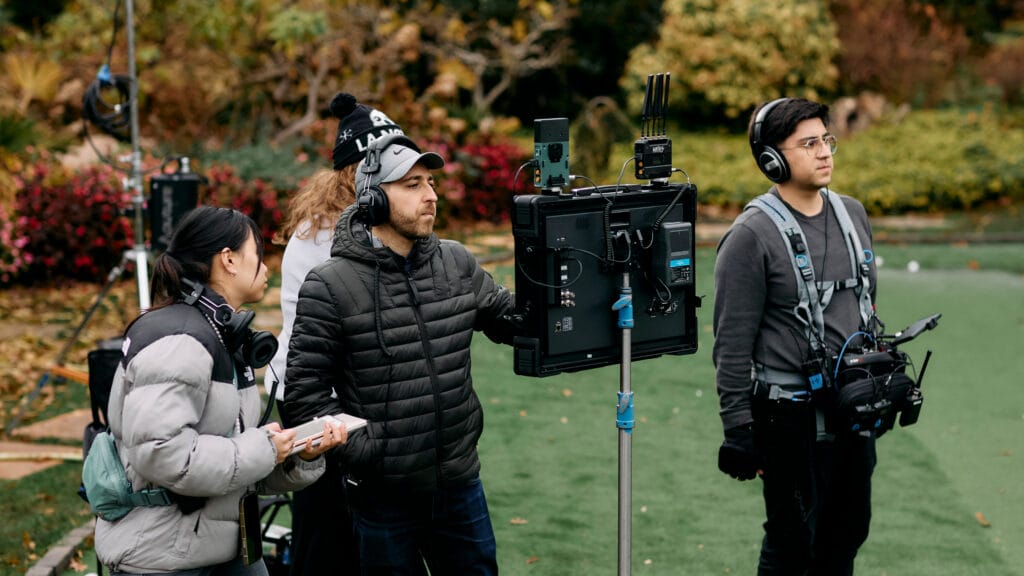
Vertical media and micro dramas have emerged as one of the clearest responses to that shift. Built for mobile consumption and engineered around pace, immediacy and emotional hooks, the format has moved rapidly from experimental to industrialized. And for directors like Dom Cutrupi, who has now worked on dozens of vertical projects, the change isn’t theoretical, it’s already reshaping how sets operate, how scripts are written and how directors adapt their craft.
Cutrupi, who trained in film and television in Italy before relocating to Vancouver, entered the vertical space in late 2023 after years directing features and commercial work. What started as curiosity quickly turned into immersion. Within months, he was helping producers break down scripts, build budgets and establish Vancouver as an emerging hub for vertical production. “I co-wrote, I directed it, and I edited as well because I wanted to understand the entire form,” he says.
That desire to understand the format from the inside has become essential as attention spans continue to compress.

Shorter Viewing, Faster Storytelling
The core premise behind vertical storytelling is simple: audiences are watching differently. Content is consumed in fragments, often on phones, often while multitasking. For directors, that reality forces immediate adaptation not just in framing, but in narrative rhythm.
Early vertical productions, Cutrupi notes, struggled to bridge that gap. Many scripts were translated directly from overseas platforms, particularly from China, where the format first scaled. “There were a lot of scripts that were very confusing to read,” he says. “Sometimes you have to completely change scenes, because nobody was understanding what was going on.”
That phase, however, didn’t last long. As the format matured, so did the writing. “Now you read the script, it’s just a normal script, with the cheekiness and feeling of vertical,” Cutrupi explains.
The difference is less about quality and more about density. Scenes need to hook quickly, emotional beats arrive faster, and narrative information is compressed without losing clarity. Directors are no longer easing audiences in, they’re meeting them mid-scroll.
A Set That Moves at Phone Speed
That compression extends to production itself. While vertical projects may operate with smaller budgets, the pace on set is often faster than traditional television.
“Sometimes we shoot eight or nine pages a day. Sometimes we shoot 13, 14, 15,” Cutrupi says.
For actors, that speed demands a different level of preparation. Leads are often hired with little lead time and expected to carry heavy dialogue loads immediately. “You need to know pages and pages of dialogue every single day,” he says.
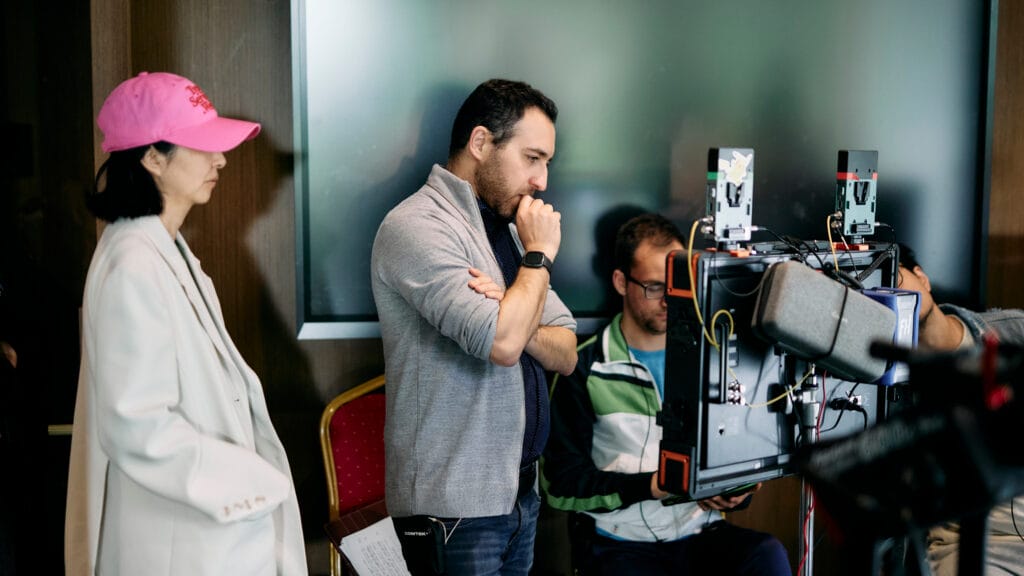
Despite the pace, the structure of sets has professionalized quickly. Early vertical productions often lacked the safeguards standard in legacy media. That has changed. “Now it’s more like you’re shooting a whole film,” Cutrupi notes. “I never shot an intimacy scene without intimacy coordinators.”
As the format scales, production norms are aligning more closely with traditional film and television, even as the runtime shrinks.
Why Directors Are Leaning In, Not Looking Down
One of the lingering misconceptions around vertical media is that it represents a “lesser” form of storytelling. Cutrupi has little patience for that framing.
“There’s a lot of excitement,” he says of the crews and actors working in the space. Many performers now work full-time in vertical productions, using the format as both a career path and a training ground. “It’s a training ground for actors,” he adds.
Cinematographers, too, are increasingly embracing the challenge. The vertical frame demands different visual logic tighter compositions, intentional blocking and constant awareness of mobile viewing habits. According to Cutrupi, many DPs see it as a space for experimentation rather than limitation.
The divide, he observes, comes down to attitude. “There’s always the occasional person treating this like a lower format,” he says. “They don’t last long in this business.”
Global Growth, Local Adaptation
While vertical media’s roots are firmly planted in Asia, its expansion has become increasingly global. Vancouver, in particular, has emerged as a key North American hub, second only to Los Angeles.
The reasons are practical as much as creative: currency advantages, a deep talent pool, and strong cultural bridges to overseas platforms. “Vancouver is a great bridge,” Cutrupi explains, citing the city’s multilingual workforce and established production infrastructure.
Europe is beginning to follow suit, though more slowly. London has already established itself as a vertical production center, with activity spreading into Germany and beyond. According to Cutrupi, the challenge isn’t demand, it’s logistics, cost and scale.

What Comes Next
If shrinking attention spans created the opening for vertical media, its next phase will be defined by genre expansion and narrative sophistication.
“I’m a big believer that once vertical gets into horror, sci-fi, thriller,” Cutrupi says, “more people in North America will watch it because they can recognize the patterns of storytelling.”
Industry projections suggest vertical media will continue moving toward the mainstream through 2026, with broader audience normalization following shortly after. “Between now and 2026, 2027, it’s when everybody will kind of know and get used to watching shows in vertical,” Cutrupi says.
For directors, the takeaway is clear: shorter doesn’t mean smaller. As audiences adapt to faster consumption, filmmakers who learn to tell compelling stories within tighter frames may find themselves ahead of the curve not chasing it.


