Community Is the Career: Why Events Like Casa NoHo Matter
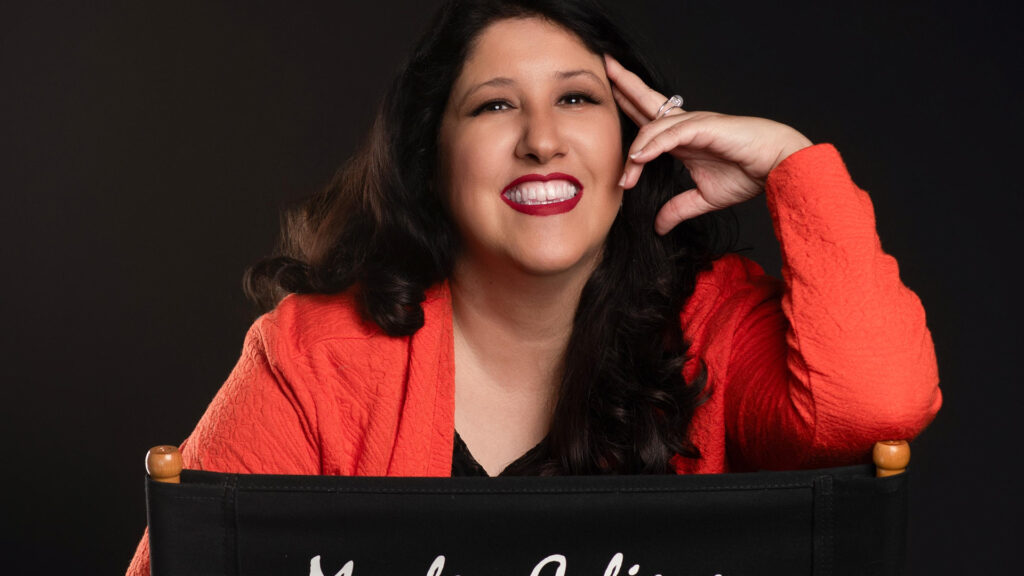
Maylen Calienes can tell you how the old system works, because it didn’t work for her.
By: Taylor Fox
November 17, 2026
Film Festival
The actors’ side of Hollywood’s vertical boom isn’t in the casting breakdown. It’s in the room.
On a recent October afternoon in North Hollywood, a few hundred people packed into a studio to talk about a format designed to be watched on a phone, held upright, in 90-second bursts. If you squinted, you might have mistaken it for a very enthusiastic tech conference. Then someone said the word “telenovela,” and the whole thing clicked. This was a family reunion for a genre that’s been around for generations and just got a new screen.
The Latino Vertical Summit at Casa NoHo Studios, presented with Fuego Shorts and The Workbook, billed itself as a day of conversation, dealmaking, and discovery, with 250-plus creators, executives, and talent. For anyone who makes a living in front of a camera, that guest list is the story. Actors have been told for years that the path is simple: get an agent, get the audition, get the part. But the people actually building the next version of this business were standing in the same room, holding drinks, swapping numbers.
My argument is that this is where actors should be spending more of their time. Not instead of auditioning, but alongside it. Community isn’t a nice extra on top of the career. In 2026, it is the career.
Who Is Maylen Calienes?
Maylen Calienes is a Los Angeles-based actor, writer, director, and producer, and the founder and president of Latino Filmmakers Network (LFN), a nonprofit that champions Latino storytellers through visibility and education. She started in theater and transitioned to film after running into the stereotyping that limited the roles she was offered as a Latina actor. She taught herself the craft of filmmaking through her own projects, including a flamenco-driven short that premiered at the LA Short Film Festival at the Arclight Cinema.
She has since produced several award-winning festival films, two of which were optioned, and has had work pitched as a TV series. LFN’s presence at the Sundance Film Festival, where it celebrates 13 years next year, is built around giving the community visibility, and Calienes hosts events for Latino and other underrepresented filmmakers throughout the year. Her through-line is simple: better stories, told by the people they belong to.
The Box
Maylen Calienes can tell you how the old system works, because it didn’t work for her.
She moved to L.A. from the theater world and quickly found steady commercial and industrial work. Theatrical auditions were another story. She was being sent out for a narrow slice of roles, and the reason was simple: She’s Latina. “I was being put in a box,” she says. The work stopped feeling like acting.
Plenty of actors know the feeling. What’s less common is what she did next. She started working behind the camera as a PA and AD, learning how sets actually run. A filmmaker friend encouraged her to make something for a festival. She’d never been to film school, so she made a 10-minute flamenco short told entirely through body language and dance, and a friend who had gone to film school talked her through editing it over the phone. The film screened at the Arclight in Hollywood. Sitting in that theater, watching her own work on the big screen, she decided where she was headed.
That’s a good story, but it’s also a template. Nobody gave her permission. She found a few people, learned a skill from one of them, and put something in front of an audience. Every step ran through a relationship.
Why Now
The timing for this kind of move has rarely been better, and the money is the reason. Omdia projects U.S. microdrama revenue at roughly $1.5 billion in 2026. SAG-AFTRA has a dedicated Verticals Agreement covering productions with budgets under $300,000, which means union actors have a lane in a format that used to live outside the system. Studios, platforms, and A-list names are entering the space, in part because traditional channels have been offering fewer opportunities.
You can roll your eyes at the format, and plenty of people do. (A 60-second cliffhanger about a billionaire’s secret twin isn’t going to make anyone’s Criterion list.) But the cynics have to reckon with the fact that somebody has to play the secret twin, and that these shows get cast, shot, and delivered at a pace traditional television can’t touch. For actors, that means reps, reels, and credits. It also means access to producers and directors who are actively hiring.
And the people doing the hiring are gathering in rooms.
The Novela Advantage
Here’s the part that makes the Casa NoHo version of this conversation more interesting than the generic “verticals are the future” panel. Ben DeJesus, the founder of Casa NoHo Studios, has said that the DNA of microdramas is essentially Latin American telenovelas. If you’ve ever watched an abuela’s afternoon programming, you know he has a point. Heightened emotion, secrets, betrayals, and a final beat that makes you say “wait, what?” are the foundations of a format that Latino audiences have been fluent in forever.
That fluency matters for actors. DeJesus has also said that some of the best directors working in vertical are Latino, and the summit’s own programming put “Latino talent, creators & casting” on the agenda right next to “Hollywood Goes Vertical.” For once, this is a corner of the industry where cultural specificity is the selling point rather than the thing that gets you typecast.
For Calienes, who has spent a career pushing back on the stereotypes that flatten Latino characters, that shift is a big deal. Her view is that people form their ideas of a community through what they see on screen, and the American Latino voice is still being defined. Vertical, with its low barriers and quick turnaround, is a way to define it faster. As she puts it: “We want to hear more of that voice.”
Why Rooms Matter
So why events? Because jobs in this part of the industry don’t come from a job board. They come from the producer you met at the panel, the director who liked your take in the Q&A, the friend of a friend who needs a lead by Monday. The format moves too fast for the old pipeline.
This isn’t just a Casa NoHo phenomenon. Content Americas in Miami, which ran in January with a sold-out exhibition floor, had a full day of sessions on microdramas and vertical programming. Casa NoHo runs a regular series of community events, and DeJesus has called them something beautiful and necessary for the Latino community. Every one of these gatherings is an on-ramp to people who are building things.
Calienes has been doing this longer than most. She founded the nonprofit Latino Filmmakers Network, which is heading into its 13th year at Sundance, and she’ll tell you the same thing she told us at Casa NoHo: Showing up is the point. “Stories come out of there,” she said of events where storytellers gather. “Friendships come out of there. Relationships come out of there. And that’s where it starts.”
Here’s the practical version, without the motivational-poster energy:
- Go to the thing. Pick one event a month. Panels are fine, but the real value is in the hallway.
- Talk to the person behind the camera. Directors, editors, and writers are the people most likely to cast you again.
- Make something small. Calienes’ advice is that you can shoot a vertical in your backyard, and you can shoot a film on a phone. You don’t need Hollywood, or a celebrity’s phone number.
- Don’t stay in the box. If the breakdowns only see one version of you, build the other version yourself.
None of this guarantees a career. Plenty of vertical productions run on tight budgets and tighter schedules, and actors should read the contract and know their union rights. But the old model of waiting by the phone isn’t working for most people, and the new one is happening in rooms with open doors.
Calienes’ own advice to emerging artists is almost embarrassingly simple: Tell your story. It’s good advice for a business that increasingly rewards people who show up and make things with other people. Go find the room.