I Don’t Know How an Actor Starts Out Now”: An Honest Look at Breaking In Today
Nicholas Gonzalez has spent decades working in an industry that, by his own account, no longer resembles the one he entered.
By: Taylor Fox
November 15, 2026
Entertainment
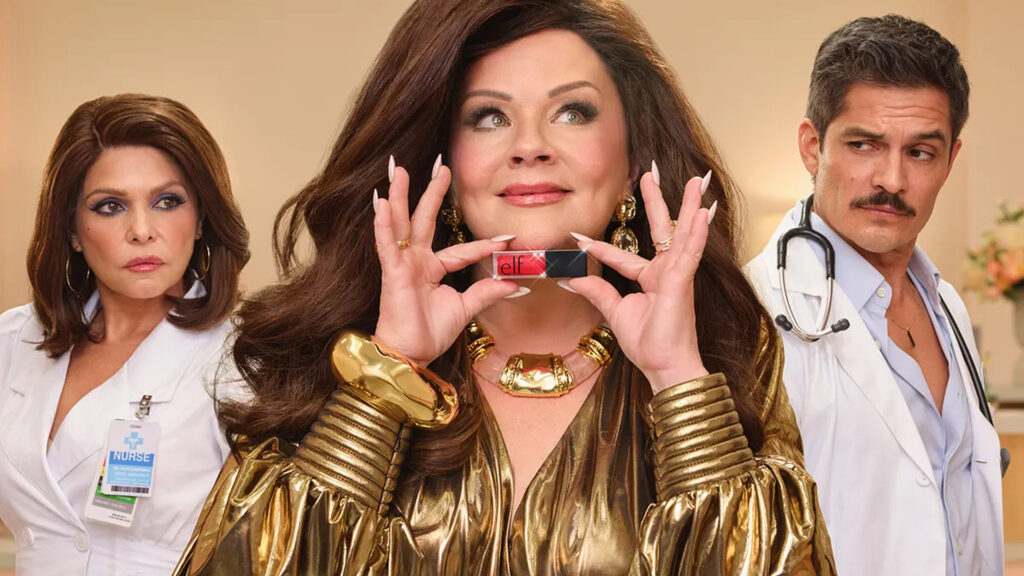
“I Don’t Know How an Actor Starts Out Now”: Nicholas Gonzalez on Breaking In Today
The actor, fresh off a Super Bowl spot opposite Melissa McCarthy, on a business that has “halted,” a streaming bubble that may be deflating, and why the best move for a new performer is to build their own door.
Nicholas Gonzalez has spent decades working in an industry that, by his own account, no longer resembles the one he entered. The actor, who recently turned heads with a Super Bowl commercial alongside Melissa McCarthy, is the first to admit he’s not sure what the on-ramp looks like anymore.
“I don’t know how an actor starts out now,” Gonzalez said during an interview at Casa NoHo, a gathering celebrating Latino talent and filmmakers. “I don’t know how an actor gets work, to get an agent.”
It’s a striking admission from a working performer with a Super Bowl credit fresh on his résumé, and one that lands at a moment when many actors are asking the same question. Gonzalez describes a business that has “really just kind of halted” and then reshaped itself in ways still hard to read.
A Business in Flux
Where it goes next, he says, is an open question. Gonzalez wonders whether subscription fatigue will push audiences, and the companies chasing them, back toward something more traditional: consolidated programming, broadcast networks, even a return to pilot season.
The signs, as he sees them, are already visible. Viewers are tiring of paying for a stack of streaming services, he said, noting that “nobody wants to be paying 20 bucks for every single one for one show.” Many are drifting back toward basic cable, while the industry itself is “chasing YouTube,” which he points out can post bigger numbers than Netflix.
He is careful not to oversell the theory. “It remains to be seen,” he said, adding that he’s curious how audiences will respond as AI creeps further into the content pipeline. “It’ll be interesting to see what people will and won’t put up with.”
The Case for Staying Open
That uncertainty extends to one of the hottest corners of the business: vertical, short-form series built for phones. Gonzalez arrived at the event, he said, as “a little bit of a critic” of the format, though not an opponent. He left more intrigued.
A filmmaker he has known since the late ’90s, an actor who has since moved into producing, walked him through where the space is headed, including budgets that are growing. Gonzalez’s read: the format is more viable than he assumed, though he’s still watching for viewer burnout.
Build the Thing Yourself
For all his doubts about the traditional path, Gonzalez is bullish on the alternative. His longtime quip to aspiring actors, “if you can see yourself doing anything else, then do it,” applies with even more force today, he says. But for those who can’t imagine anything else, the tools have never been more accessible.
“If you have a firm idea or a story to tell, the means to do it have never been more available than they are now,” he said. The point echoes a refrain that ran through the event: a phone in your pocket, free editing software, and an audience a few clicks away.
Gonzalez is taking his own advice. After years of what he describes as “fielding” incoming projects and staying open to whatever came his way, he’s now carving out time to develop material that has long held his interest, through writing and producing.
Doors Still Open
The Super Bowl spot itself, he notes, didn’t come through the usual channels. The offer traveled by word of mouth, from a colleague on a film set to a friend at the brand, before reaching him. Working with McCarthy, he said, was “a dream.” She was an “absolute sweetheart,” open to ideas and playful on set. “We had a blast.”
It’s a reminder that even in a market he finds hard to decode, relationships and reputation still matter. As for the community that brought him to Casa NoHo, Gonzalez was struck by what he called the “unification of black and brown” in the room, and he encouraged anyone unsure whether the event was for them to come if they’re in the business of telling stories.
His message to newcomers is equal parts caution and encouragement. The old gatekeepers may be harder to find, but the gates are less necessary than they used to be.


